Digital Marketing for Small Business: The Complete Guide to Growth in 2026
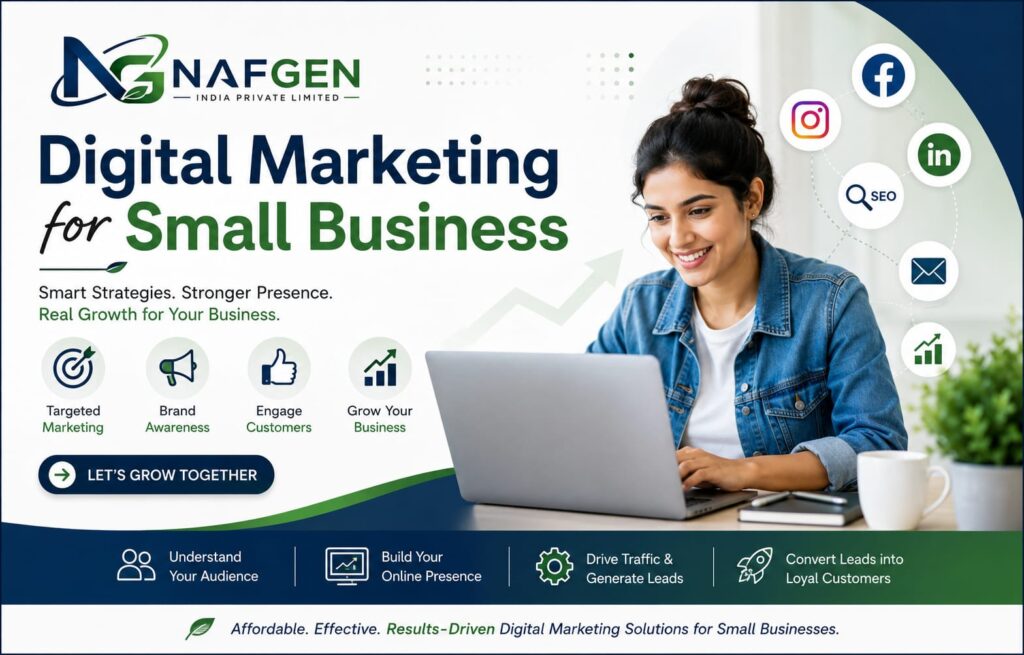
Running a small business in 2026 is both exciting and challenging. The good news is that the internet has leveled the playing field. Today, a local shop or a 2-person startup can compete with big brands if they use digital marketing the right way.
Traditional marketing like newspaper ads, billboards, and pamphlets is expensive and hard to track. Digital marketing for small business solves this problem. It is affordable, measurable, and allows you to reach exactly the people who are most likely to buy from you.
Whether you own a clothing store, a coaching center, a restaurant, or a service business, this guide will show you step by step how to use digital marketing to get more customers, build your brand, and grow revenue.
By the end of this article, you will understand what digital marketing is, why it matters for small businesses, and exactly what strategies to implement in 2026.
1.What is Digital Marketing for Small Business?Digital Marketing For Small Business
Digital marketing is the process of promoting your products or services online using digital channels. For small businesses, it means using the internet to attract new customers, keep existing customers engaged, and drive sales.
Key Channels Include
1. Search Engine Optimization – SEO – Ranking on Google for free
2. Social Media Marketing – Building brand on Instagram, Facebook, LinkedIn
3. Paid Advertising – PPC – Google Ads and Facebook Ads
4. Content Marketing – Blogs, videos, and posts that educate customers
5. Email Marketing – Sending offers and updates to your customers
6. Website and Local Listings – Your digital storefront and Google Business Profile
The goal is simple: Be where your customers are searching, and make it easy for them to buy from you.
2. Why Digital Marketing is Critical for Small Businesses in 2026
Big companies have huge budgets. But small businesses have something better: agility, personal touch, and the ability to connect with local customers. Digital marketing helps you use these strengths.
2.1 Affordable Marketing
A small business cannot afford a 10 lakh TV ad. But you can run a Facebook Ad for ₹500 per day and reach 5000 people in your city. Digital marketing gives the best ROI for every rupee spent.
2.2 Targeted Reach
Instead of showing ads to everyone, you can target “women aged 25-40 in Faridabad who are interested in fitness”. This means less waste and more sales.
2.3 Measurable Results
You can see exactly how many people clicked your ad, visited your website, and bought your product. No guesswork. If something is not working, you can change it immediately.
2.4 Build Trust and Authority
When your business appears on Google, has good reviews, and posts helpful content, people trust you more. Trust = More Sales.
2.5 Compete with Big Brands
SEO and social media allow small businesses to rank and go viral without a big budget. Many small brands have become national brands just through Instagram and Google.
If you are not doing digital marketing, your competitors are taking your customers.
Chapter 3. Step-by-Step Digital Marketing Strategy for Small Business
Let’s break down exactly what you need to do.
Step 1: Build a Strong Online FoundationWhat is a digital marketing campaign?
Before running ads, you need a home base.
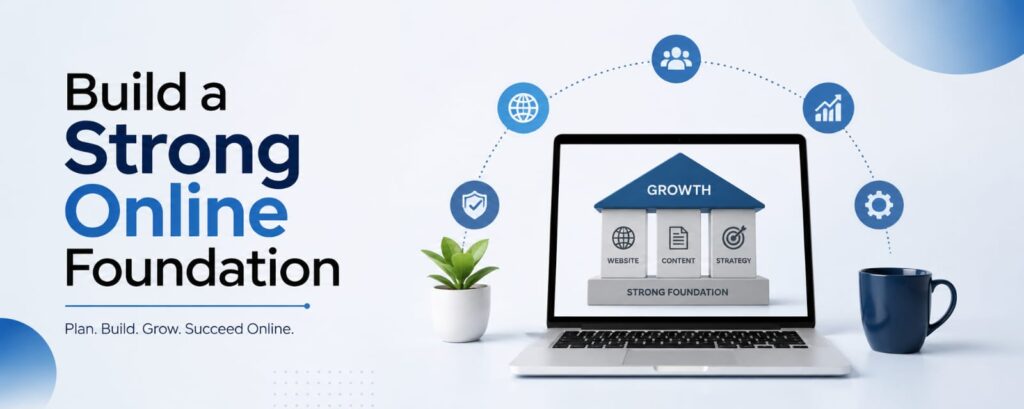
A. Website
Your website is your 24×7 shop. It should be.
– Mobile friendly
– Fast loading
– Clear about what you sell
– Have contact form and WhatsApp button
– Optimized for SEO
If you don’t have a website yet, start with a simple 1-page website or even a Google Business Profile.
B. Google Business Profile
This is free and critical for local businesses.
Add your business name, address, phone, photos, and services. Ask customers for reviews. When someone searches “best bakery near me”, your business will show up.
Step 2: Search Engine Optimization – SEO for Small BusinessWhy Is SEO Necessary?
SEO helps you get free traffic from Google.
What to do.
1. Keyword Research: Find what people search. Ex: “digital marketing for small business”, “best cake shop in Delhi”
2. On-Page SEO: Use keywords in your website titles, headings, and content
3. Local SEO: Add your city name on website pages. Get listed in local directories
4. Content: Write blogs that answer customer questions. Ex: “5 tips to choose a wedding photographer”
5. Reviews: Get Google reviews. They help you rank higher
SEO takes 3-6 months but brings long-term free customers.
Step 3: Social Media Marketing
Social media is where people spend 3+ hours daily. For small businesses, it’s the best branding tool.
Best Platforms:
– Instagram and Facebook: For products, fashion, food, beauty, coaching
– LinkedIn: For B2B services, consultants, agencies
– YouTube Shorts and Reels: For tutorials, behind-the-scenes, testimonials
What to post:
– Product photos and videos
– Customer testimonials
– Tips and how-to content
– Behind-the-scenes of your business
– Offers and discounts
Pro Tip: Post 3-4 times per week. Be consistent. Reply to every comment and DM.
Step 4: Paid Advertising – Get Customers Fast
If you need results in 7 days, run ads.
Google Ads: Show your business when someone searches “plumber near me”
Meta Ads: Show your product to people based on age, interest, location
Tips for Small Business Ads:
– Start with a small budget of ₹300-₹500 per day
– Use clear images and simple text
– Offer something: “20% off” or “Free consultation”
– Send traffic to a landing page, not just homepage
– Track leads and calls
Paid ads give instant traffic while SEO builds up.
Step 5. Content Marketing
Content builds trust before people buy.
Ideas for Small Business Content:
– Blog: “How to choose the right interior designer”
– Video: “3 mistakes people make when buying shoes online”
– Carousel: “5 benefits of digital marketing for small business”
– Email: Weekly tips + offer
The rule is 80% value, 20% promotion. Help first, sell later.
Step 6: Email and WhatsApp Marketing
Your past customers are your goldmine.
Collect emails and phone numbers. Send:
– New product updates
– Festival offers
– Thank you messages
– Reminders
Tools like Mailchimp and WhatsApp Business are free and easy. One email can bring 10 repeat orders.
4. Digital Marketing Budget for Small Business
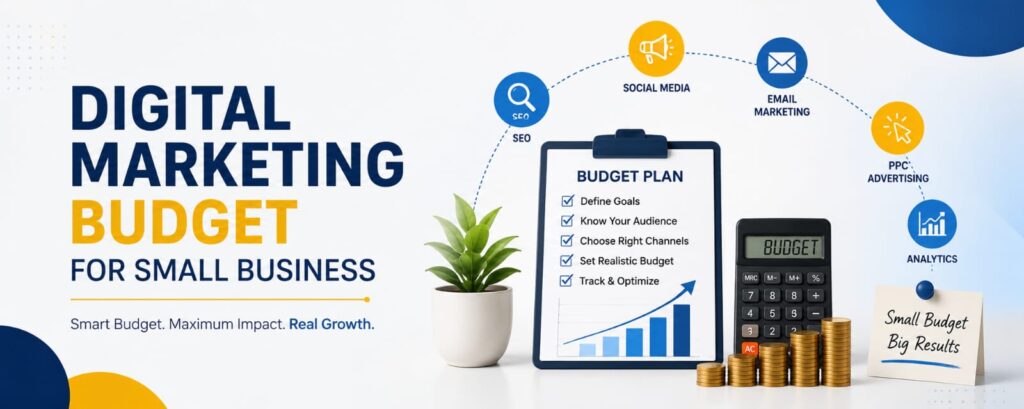
Many small business owners think “I don’t have budget”. Here is a realistic plan:
Budget Breakdown – ₹10,000 per month example
**Activity** | **Monthly Budget** | **Purpose**
- Website + Hosting | ₹1,000 | Foundation
- Google Ads | ₹4,000 | Immediate leads
- Meta Ads | ₹3,000 | Brand awareness
- Content Creation | ₹1,500 | Blogs, reels, posts
- Tools and SEO | ₹500 | Analytics, email tool
- Even with ₹5000 per month, you can start. The key is to start small, test, and scale what works.
5. Tools Every Small Business Should Use in 2026
You don’t need 20 tools. Start with these 5 free/low-cost tools:
1. Google Business Profile – For local visibility
2. Google Analytics – To track website visitors
3. Canva – To design posts and ads
4. Meta Ads Manager – To run Facebook and Instagram ads
5. WhatsApp Business – To talk to customers and send catalogs
As you grow, you can add SEO tools, email automation, and CRM.
6. Common Mistakes Small Businesses Make in Digital Marketing
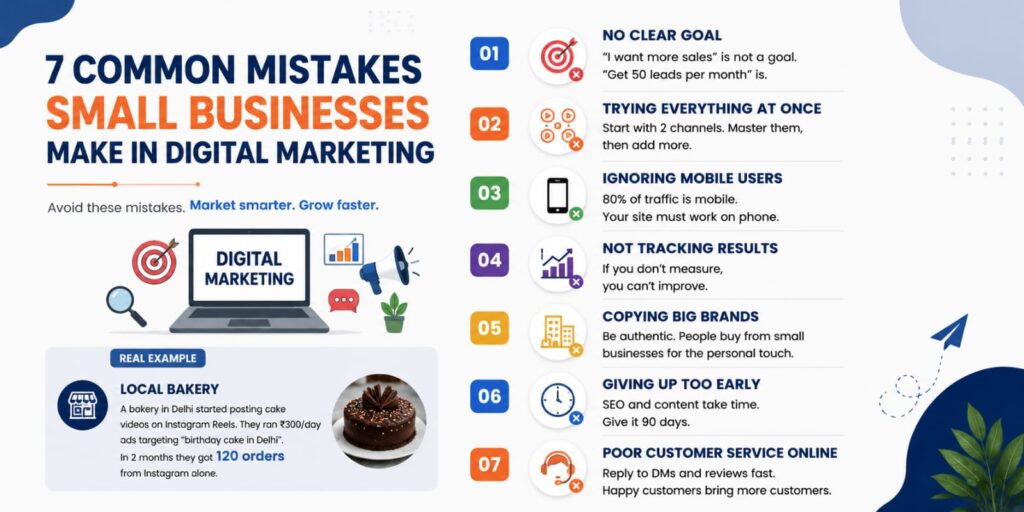
Avoid these 7 mistakes:
1. No Clear Goal – “I want more sales” is not a goal. “Get 50 leads per month” is.
2. Trying Everything at Once – Start with 2 channels. Master them, then add more.
3. Ignoring Mobile Users – 80% of traffic is mobile. Your site must work on phone.
4. Not Tracking Results – If you don’t measure, you can’t improve.
5. Copying Big Brands – Be authentic. People buy from small businesses for the personal touch.
6. Giving Up Too Early – SEO and content take time. Give it 90 days.
7. Poor Customer Service Online – Reply to DMs and reviews fast.
Chapter 7. Real Examples of Digital Marketing for Small Business
Example 1. Local Bakery
A bakery in Delhi started posting cake videos on Instagram Reels. They ran ₹300/day ads targeting “birthday cake in Delhi”. In 2 months they got 120 orders from Instagram alone.
Example 2: Coaching Center
A tuition center wrote blogs like “How to score 95% in 10th Math”. They ranked on Google. Parents started calling. They spent 0 on ads.
Example 3. Clothing Brand
A small boutique started WhatsApp catalogs and weekly status updates. They built a list of 800 customers. Every new collection sells out in 3 days.
The pattern is clear: Be consistent, provide value, and show up where customers are.
8. How to Measure Success
Don’t chase likes. Track business metrics:
1. Website Traffic – How many people visit your site
2. Leads – How many people filled form or called
3. Cost Per Lead – How much you spent to get 1 customer
4. Sales and Revenue – The final number
5. Google Reviews – Social proof
Check these numbers every week. Double down on what works.
9. Digital Marketing Trends for Small Business in 2026
Stay ahead with these trends:
1. AI Tools – Use ChatGPT and Canva AI to create content faster
2. Short-Form Video – Reels and Shorts get the most reach
3. Voice Search – People say “best salon near me” to Alexa. Optimize for that
4. Hyper-Local Marketing – Target 3-5km around your shop
5. Customer Reviews – Reviews are the new word-of-mouth
Small businesses that adapt fast will win.
Chapter 10: 30-Day Action Plan to Start Digital Marketing
If you are starting from zero, follow this:
Week 1: Set up Website + Google Business Profile + Social Media Pages
Week 2: Post 3 times on social media. Write 1 blog. Ask 5 customers for Google reviews
Week 3: Run your first ₹300/day Facebook Ad. Create WhatsApp catalog
Week 4: Analyze results. What got clicks? Do more of that. Plan next month
- Consistency for 90 days will change your business.
- Conclusion: Start Today, Grow Tomorrow
Digital marketing for small business. is no longer optional. It is the most cost-effective way to get customers, build trust, and grow in 2026.
You don’t need a huge team or budget. You need clarity, consistency, and the willingness to learn. Start with a website, Google profile, and one social media channel. Add ads and SEO as you grow.
Remember: Big brands were once small too. The only difference is they started.
Your customers are already online searching for what you sell. The question is: Will they find you or your competitor?
Start today. Post your first update. Run your first ad. Write your first blog. Small steps every day will lead to big results.
The future of your small business is digital. And the best time to start was yesterday. The second best time is now.