A digital marketing campaign is a strategic plan designed to promote your business online. The goal of a digital marketing campaign is to expand your business in relevant online spaces, thereby boosting brand awareness, engagement, and conversions among your target audience.
Digital marketing includes any method that connects you to your audience via a screen. This includes techniques such as:
- Social media marketing
- Email marketing
- Content marketing
- SEO
- SEM
- Affiliate marketing
- Pay Per Click (PPC)
- Influencer marketing
- Mobile marketing
- Video marketing
Social media marketing
Social media marketing (SMM) is a form of digital marketing that utilises social media platforms to promote a product or service, increase brand awareness, engage with customers, and drive website traffic.
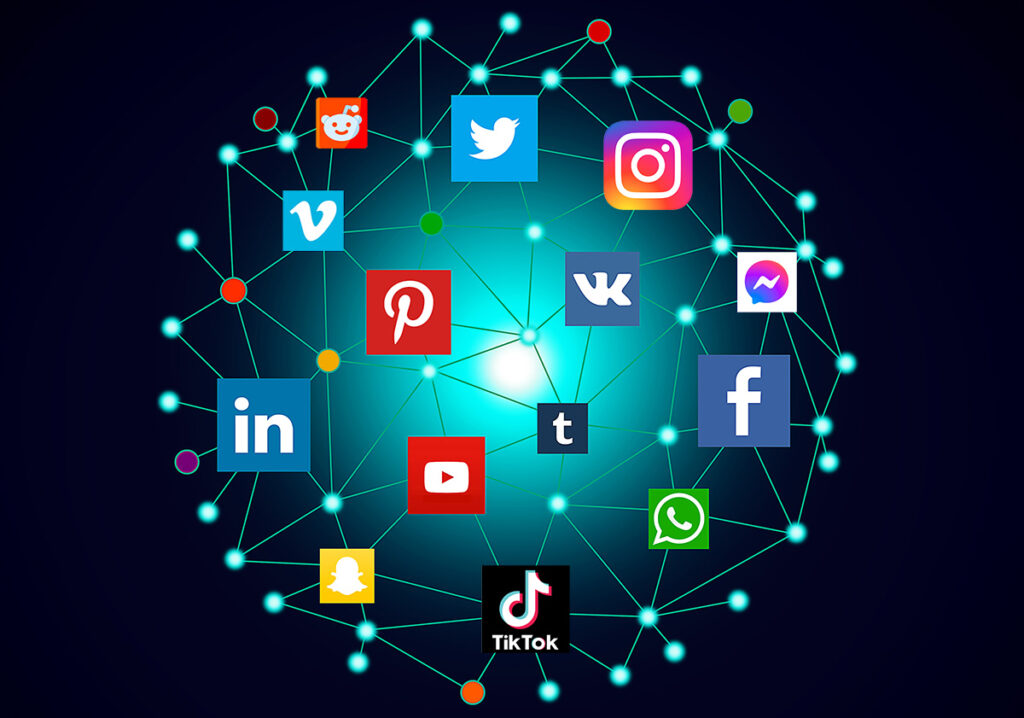
Social media platforms such as Facebook, Twitter, Instagram, LinkedIn, YouTube, and TikTok are commonly used for SMM. This typically involves creating and sharing content across social media networks, as well as engaging with users through comments, direct messaging, and other forms of activity. The content may include text, images, audio, videos, and more.
Social Media Marketing allows businesses to reach specific audiences at a relatively low cost compared to traditional marketing methods. It also offers the ability to target very specific audiences based on demographics, interests, and other factors. This sniper’s rifle approach serves to improve performance as campaigns are tracked and optimised.
Email marketing
Email is as a highly effective direct marketing channel and could be considered the modern version of direct response marketing.
Email marketing campaigns are core strategies in modern digital marketing, with entire businesses successfully built on the communication channel.
The real benefit of email marketing is the direct relationship you can build with your audience that you can control without the threat of a third party closing an account. A qualified email marketing list is priceless!
At a time when search platforms are getting more aggressive with advertising, generative AI is taking away organic traffic and some social media platforms are unstable, email is a way that brands can engage with their users and nurture trusted relationships.
Keep reading to understand how you can use email marketing to connect with your audience.

Content marketing
Content Marketing is a strategic approach to marketing a business or brand by creating and publishing and communicating valuable and relevant content to attract and retain a defined target segment. Content marketing is an ongoing process integrated into the long term marketing strategy which includes educational articles, e-books, videos, newsletters, entertainment, webinars, podcasts etc. The content is not about the products o the services the company sells but the high quality and relevant information and experience the customers
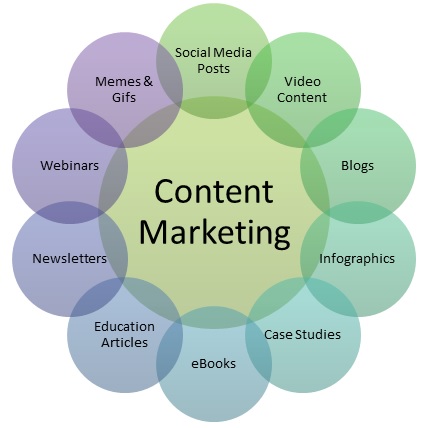
The various methods in which marketing companies can drive content marketing are as follows:
1. Social Media Posts
2. Video Content
3. Blogs
4. Infographics
5. Case Studies
6. Books
7. Education Articles
8. White paper & Newsletters
9. Webinars
10. Memes & Gifs.
SEO
SEO stands for search engine optimization and it’s the process of optimizing content to be discovered through a search engine’s organic search results.
How does search engine work?
If you’re completely new to SEO, then it’s easiest to think of search engines as libraries. These libraries instead of storing books, will store copies of websites and web pages. When you search for a query, the search engine will then look through all pages in its index and try to return the most relevant results. SEO helps demonstrate to search engines that your page is the result.
Before you type any keyword, Google plays a very important role. It has already done some functions. As we all know, there is a lot of data on the internet, that is, the World Wide Web. Google’s crawler or you can also call it spider, crawls all that data that we used to post on Google websites and it picks up all that data and sends it to its local server. The meaning of a server is that it is saving all the data on Google’s hard disk.
On-page SEO
On-page optimization as the name suggests is the practice of optimizing web pages to rank higher and get relevant traffic from the search engine. On-page optimization includes both content and HTML source code optimization. Search engine optimization can be very complex. When you look at the hundreds of signals that go into SEO, they can be broken up into either relevancy or popularity.
We’re going to talk about the on-page factors. These are the factors that you have a direct impact on and you can make a small tweak and have a big impact on organic traffic with your on-page relevancy factors.
The primary, on-page relevancy factors that we will cover here are title tags and Meta descriptions, header tags that are used for headlines and subheadings, website URL and URL structure, internal links, keyword usage, and sitemaps.
Off-page SEO
It refers to action taken outside your website to impact your ranking within the search engine results page. ON PAGE SEO was all about taking action on your website, and OFF PAGE SEO is all about actions outside your website.
The primary OFF PAGE SEO element is link building or backlinks.
Backlink is the most important metric when we talk about OFF PAGE SEO.
SEM
SEM: Scattered Electrons Offer a Surface-Level View
With SEM, a high-energy electron beam is directed through a series of lenses and coils that focus and guide it in a raster pattern across the surface of a sample. As the focused beam interacts with the sample, it generates backscattered and secondary electrons, which are captured by detectors and recorded pixel by pixel.
This process creates detailed, high-resolution 3D images of a sample’s surface. Compared to TEM, SEM offers the advantages of a larger field of view and the ability to analyze thicker samples, simplifying sample preparation.

TEM: More than a Passing Activity
TEM involves imaging beyond the surface of the sample, providing a glimpse into the intricate internal structures. In TEM, a wide, static electron beam passes through a series of lenses that guide it to the sample. Unlike SEM, where electrons bounce off the surface, in TEM, the beam travels through the sample and continues through additional lenses that magnify and project the image onto a viewing device, such as a camera, at the base of the instrument. This process creates highly detailed, two-dimensional images.
Because electrons are easily deflected by matter, TEM requires samples to be extremely thin—typically just a few hundred nanometers thick—a challenging preparation step. While TEM offers a smaller field of view and is limited to thin samples, it outshines SEM in magnification and spatial resolution, offering unparalleled insights into the microstructures inside cells and other fine details at the nanoscale.
In the rapidly evolving field of electron microscopy, both TEM and SEM continue to push the boundaries of discovery, with advanced modalities enabling electron microscopy to reveal ever more intricate details of the microscopic world.
Affiliate marketing

Affiliate marketing has become an effective option especially to business ventures that aim to increase scope and increase profitability. The issue was highly discussed in the Cyprus Digital Marketing Summit since it is a mixture of strategy, performance, and collaboration. Agency, brand and startup pros came to be taught practical methods and get to grip with models of relationships, as well as the way Affiliate marketing can get added to larger digital campaigns. This article identifies the most important things mentioned during the summit, which show how Affiliate marketing can achieve concrete outcomes with the focus on experience, knowledge, authority, and trust.
Why Affiliate marketing Matters in Modern Digital Strategy.
Affiliate marketing also enables the businesses to access networks of partners who market the product or services on commission. The summit has added that Affiliate marketing is no longer an ancillary channel. It will play a huge role in generating revenue when handled in the right way. Speakers made demonstrations of real-life examples where affiliate campaigns delivered huge traffic, quality leads, and incremental stores with no initial expenses incurred as usual with traditional advertising.
Knowledge Sharing Based on Best Practices of the Top Professionals.
The conferences were experience-oriented. Presenters had personal experiences of successful and those campaigns that needed a change of direction. A case study simply emphasized a brand that was able to go global through collaboration with local affiliates. There was another example where performance-based approaches aided a company to generate more publicity, and more conversions of the products in question. The experiences highlighted that Affiliate marketing is a subject that needs proper planning, continuous monitoring and relationship management.
Creating Successful Affiliate Programs.
Any effective affiliate program is started with clear objectives. The experts at the summit highlighted the need to state goals as the growth in sales, consideration of brand awareness, or recurring revenue. It is also necessary to organize commissions, choose and entertain the solid partners, and offer marketing services. Affiliates carry out their work successfully with well-structured programs that do not hurt the image of the brand.
Choosing the Right Interlocutors.
This is because it is important to select the right affiliates. A business model does not suit all partners. The summit talked about strategies of screening potential affiliates; such as considering the relevance of the audience, the quality of content, and the level of engagement. Successful affiliates will be transformed into long-term partners, pumping up campaigns and producing steady output.
Tracking and Analytics for Affiliate marketing
Information and analytics were in the spotlight as important aspects of Affiliate marketing. Summit speakers taught the value of tracking conversions, clicks, and engagement so that the marketer can optimize the campaign and compensate the best performing partners precisely. Smooth tracking means accountability and to create confidence between affiliates and brands. It is also meaningful in scaling programs.
Ethical and Legal Standards.
Transparency and compliance is also very imperative in Affiliate marketing. Summit sessions were focused on adherence to regulations, reporting of partnerships, and the promotion of false promotions. It will need to have trust not only with affiliates but also with end customers. Morality builds brand loyalty and guarantees the success in the long run in Affiliate marketing.
Leveraging Content for Affiliate marketing
The focus of content is the key to the Affiliate marketing results. Potential customers can be taken through the sales process with the help of blog posts, reviews, tutorials and email campaigns. Summit professionals have illustrated on the benefits of informative and quality content which enhances more engagements and conversions as well as enabling affiliates to fully market products. Placing affiliate links in the middle of valuable content is natural because it will be relevant and will not make the audience lose confidence.
Scaling Affiliate marketing Efforts
Affiliate marketing provides an opportunity to grow both large and small brands. The summit discussions involved scaling program, which could be recruiting new affiliates, new region expansion, or experimentation with more commission models. Ongoing facilitation and optimization of performance enable the brands to be efficient and extend their reach and revenue base at the same time.
Proficiency and Command
The summit emphasized the relevance of specialization in affiliate program management. Seasoned experts exchanged tricks on how to choose affiliates, how to run campaigns and how to analyze the outcomes. Gaining authority means being able to show stable outcomes, disseminate best practices, and give guidance on the ground of the quantifiable outcomes. Visitors were taught how these principles should be used to achieve sustainable growth.
Establishing Trust by way of Partner Relationships.
Trust is central to Affiliate marketing. Orators focused on open communication, equitable payment and reporting on time. Good relations with affiliates promote team work and lead to improved performance. Companies that have the courage to trust and be open and honest in their partnerships are able to benefit from long-term and mutually advantageous relationships.
Assimilation With more extensive Online Promotion.
Affiliate marketing does not work independently. The summit sessions examined the role it plays in complementing other platforms like email marketing, social media, SEO and paid campaigns. By committing simultaneous integration, the use of Affiliate marketing and the overall strategy makes sure that all the messages are consistent and that the ROI is optimized. Planned campaigns bring about cohesion of the user experience at touchpoints.
Long-Term Benefits of Affiliate marketing
Affiliate marketing provides short run and long-term benefits. The short term campaigns are as well a way of generating sales and leads whereas the ongoing programs create brand visibility, increase reach, and build credibility. The summit showed that strategic Affiliate marketing brings tangible effect, renatures brand presence and sustainable growth.
Conclusion
Opportunities were one of the most notable aspects of the Cyprus Digital Marketing Summit since they are a mixture of strategy, collaboration and performance. Clearly, because of the first-hand experience, professional instruction, open practices, and clear data, attendees acquired actionable insights on how to create, run, and extend affiliate programs. Contemplation, content, compliance, and analytics are the key factors to sustainable success. Whenever they incorporate Affiliate marketing to wider campaigns, business organizations will experience expansion, development of confidence and long run digital marketing objectives
Pay Per Click (PPC)
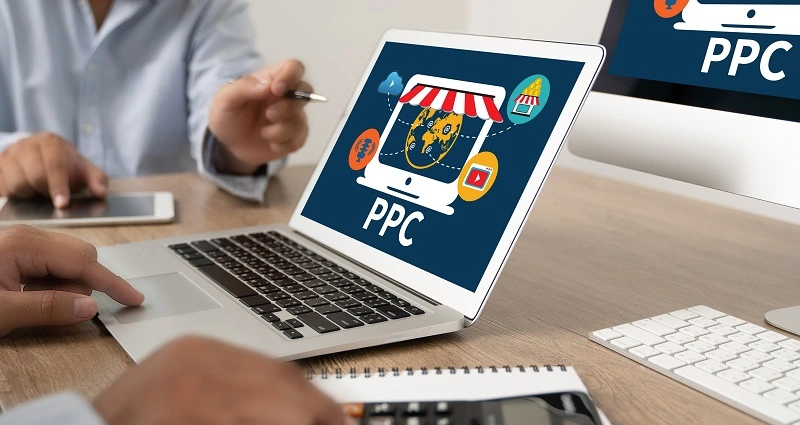
In the digital age, businesses need effective advertising strategies to reach their target audience and drive conversions. Pay-Per-Click (PPC) advertising has emerged as a powerful tool, allowing businesses to display targeted ads to users who are actively searching for relevant products or services. Google Ads, the leading PPC platform, offers a comprehensive suite of advertising solutions to help businesses maximize their Return on Investment (ROI). In this blog post, we will explore the benefits of PPC advertising, specifically with Google Ads, and provide insights on how to optimize your campaigns to achieve optimal ROI.
Precise Targeting
One of the key advantages of PPC advertising, particularly with Google Ads, is the ability to target specific audiences with precision. Google Ads allows you to define your target audience based on factors such as location, demographics, interests, and even search intent. By reaching the right people at the right time, you can increase the chances of converting potential customers into actual buyers, maximizing your ROI.
Cost Control
With PPC advertising, you have complete control over your budget. Google Ads allows you to set daily budgets and bid amounts for your campaigns. You only pay when someone clicks on your ad (hence the name “pay-per-click”), ensuring that you are investing your advertising dollars in actual engagement. By monitoring and optimizing your campaigns regularly, you can identify the most effective strategies and allocate your budget where it generates the highest returns.
Measurable Results
PPC advertising provides robust measurement and tracking capabilities, allowing you to analyze the performance of your campaigns in real-time. With Google Ads, you gain access to comprehensive data on impressions, clicks, click-through rates (CTR), conversions, and more. By leveraging this data, you can make data-driven decisions and optimize your campaigns to improve their effectiveness and increase your ROI.
Ad Customization
Google Ads offers a range of ad formats and customization options to help you create compelling and engaging ads. From text ads and responsive display ads to video ads and shopping ads, you can choose the format that best suits your business goals. By tailoring your ads to resonate with your target audience and align with their search intent, you can improve ad relevance, drive higher click-through rates, and ultimately boost conversions.
Remarketing Opportunities
Remarketing is a powerful feature offered by Google Ads that allows you to target users who have previously interacted with your website or shown interest in your products or services. By displaying ads to these users as they browse other websites or use Google’s network of partner sites, you can stay top-of-mind and entice them to return and complete a conversion. Remarketing campaigns can significantly enhance your ROI by leveraging existing interest and engagement.
Tips for Maximizing ROI with Google Ads
Comprehensive Keyword Research
Thorough keyword research is essential for PPC success. Identify relevant keywords that align with your target audience’s search queries and ensure they are integrated into your ad copy and landing page content. Use keyword research tools, analyze search trends, and monitor the performance of your keywords regularly to refine your campaigns and drive better ROI.
Compelling Ad Copy
Craft persuasive and concise ad copy that entices users to click. Highlight unique selling propositions, use compelling calls-to-action, and align your ad messaging with the user’s search intent. A/B test different variations of your ad copy to identify the most effective messaging that drives higher CTR and conversions.
Landing Page Optimization
Direct users to relevant and optimized landing pages that deliver on the promise of your ad. Ensure that the landing page provides a seamless user experience, loads quickly, and has clear and persuasive content that drives users to take the desired action. Continuously test and optimize your landing pages to improve conversion rates and maximize your ROI.
Ad Extensions
Take advantage of ad extensions offered by Google Ads to enhance the visibility and functionality of your ads. Extensions like site links, call extensions, and structured snippets provide additional information and options for users, making your ads more compelling and increasing the chances of clicks and conversions. Experiment with different ad extensions to see which ones have the most positive impact on your campaign’s performance.
Ongoing Campaign Optimization
Regularly monitor and analyze the performance of your Google Ads campaigns. Identify underperforming keywords, ad groups, or placements and make necessary adjustments. Optimize your bids, ad scheduling, and targeting parameters to ensure your ads are reaching the right audience at the right time. Test different ad variations, landing pages, and targeting options to find the optimal combination that drives the highest ROI.
Conversion Tracking and Attribution
Implement conversion tracking to measure the effectiveness of your campaigns accurately. Set up conversion goals and track them across different touchpoints to understand which campaigns, keywords, or ads are driving the most valuable actions. Use attribution models to allocate credit to various touchpoints in the user journey, enabling you to make informed decisions about budget allocation and campaign optimization.
Continuous Learning and Adaptation
Stay updated with the latest trends and best practices in PPC advertising. Leverage Google Ads’ resources, attend webinars, and engage in online communities to learn from industry experts and fellow advertisers. The digital advertising landscape is dynamic, so be open to testing new strategies and adapting your approach based on emerging trends and user behavior.
Pay-Per-Click advertising with Google Ads offers businesses immense potential to maximize their ROI and drive meaningful results. By leveraging precise targeting, cost control, and measurable performance tracking, you can optimize your campaigns to reach the right audience, at the right time, with the right message. By investing in comprehensive keyword research, compelling ad copy, landing page optimization, and ongoing campaign optimization, you can continuously improve your campaign’s performance and drive higher conversions. With continuous learning, adaptation, and the right strategy, Google Ads can be a powerful tool in your marketing arsenal, delivering substantial ROI and helping your business grow and succeed in the competitive digital landscape.
Influencer marketing
In the past few years, influencer marketing has become one of the most successful ways to market a business. With good reason, it has become a buzzword in the marketing world. Influencer marketing gives businesses a unique chance to connect with the people they want to reach through social media and trusted voices. This comprehensive guide will explain what influencer marketing is and how companies may use it to meet their marketing objectives in 2023.
Section 1: What Is Influencer Marketing?
Influencer marketing is a way to promote a brand or product by working with people who have a large following and a big impact on social media. These people, who are called “influencers,” have a large number of loyal fans and a big impact on what their fans buy. Influencer marketing aims to promote a company, raise brand awareness, and boost sales by utilizing the influencer’s authority and network.
Authenticity, credibility, and trust are essential components of influencer marketing. Influencer marketing, as opposed to conventional advertising, is built on reliability and sincerity. Influencers’ recommendations and endorsements are more persuasive than conventional advertising because their followers perceive them as reliable sources of information.\
Influencers come in a variety of forms, including celebrities, macro-, micro-, and nano-influencers. “Celebrities” are well-known people who have a large number of fans and a lot of power. Although they have fewer fans than superstars, macro-influencers are nevertheless well-known and powerful. Although they have a smaller audience, micro-influencers have a devoted and highly engaged following. The tiniest followings belong to nano-influencers, who are highly specialized and have a close relationship with their audience.
Daniel Wellington’s partnership with influencer Kendall Jenner led to a 50% increase in sales, and Glossier’s collaboration with 10 micro-influencers for its UK debut led to a 6.4x return on investment.
Section 2: Why is influencer marketing important?
The development of social media has had a profound effect on the marketing sector. Consumers now turn to social media sites like Instagram, YouTube, and TikTok as their go-to sources for product reviews and recommendations. Because of this, influencer marketing has become an important part of a company’s marketing mix.
Another thing that makes influencer marketing crucial is the trust component. When compared to traditional advertising, consumers are more likely to believe suggestions and endorsements from people they respect and follow. Businesses may take advantage of this trust by using influencer marketing to connect with their audience.
Statistics on influencer marketing also demonstrate its potency. Businesses make an average of $5.20 for every dollar they spend on influencer marketing, according to a Mediakix survey. 63% of people trust influencers more than companies, according to a different survey by Influencer Marketing Hub.
Section 3: How to Implement Influencer Marketing
An influencer marketing strategy must be carefully planned and carried out. The following steps will help you develop a successful influencer marketing campaign:
Set your objectives: Establishing your campaign goals is the first step. Do you want to advertise a new product, drive sales, or raise brand awareness?
Determine your target audience: Which influencers does your target audience follow? Finding the best influencers to work with is essential to the campaign’s success.
Select the best influencer marketing platform from the ones that are available. Each platform has different features and costs, and there are several of them. The best platform to use will depend on your financial situation, objectives, and target market.
Make a creative brief: Once you’ve chosen the right influencers and platforms, you need to make a creative brief. The campaign’s goals, essential messages, and deliverables, such as blog entries, videos, or social media updates, should all be outlined in the brief.
Discuss terms and payment: You must first discuss terms and payment with the influencers before commencing the campaign. This covers the nature of the material, the regularity of the postings, and the method of payment or compensation.
Monitor and evaluate the campaign: It is essential to monitor and evaluate the campaign’s performance. To gauge the success of the campaign, keep an eye on KPIs like interaction, reach, and purchases. Your approach will be improved as a result, and future campaigns will be optimized.
Avoid making common errors in influencer marketing, such as failing to specify the campaign’s goals, selecting the incorrect influencers, and failing to disclose the influencer’s sponsorship or business relationship with the brand.
Section 4: Choosing the Right Influencer Marketing Platform
For the campaign to be successful, picking the correct influencer marketing platform is essential. Below is a summary of the features and costs of prominent influencer marketing platforms.
AspireIQ: AspireIQ is a platform for influencer marketing that gives companies a number of tools to organise and monitor their influencer marketing campaigns. Influencer discovery, relationship management, and campaign tracking are some of its features. The price range begins at $3,000 annually.
Influencer.co: Influencer.co is a platform for influencer marketing that links companies with influencers on different social media networks. It provides capabilities including analytics, payment processing, and campaign management. The starting price is $99 per month.
Grin: is an influencer marketing platform with tools for discovering influencers, managing campaigns, and reporting. A database of more than 50,000 influencers is also available for selection. Price begins at $2,499 annually.
Upfluence is a platform for influencer marketing that gives companies a number of tools to manage their influencer marketing initiatives. Influencer discovery, relationship management, and campaign tracking are some of its features. The monthly price range starts at $500.
The benefits and drawbacks of each platform rely on your individual requirements, objectives, and financial constraints.
Conclusion
In conclusion, influencer marketing is an effective technique for companies trying to connect with their target demographic and build brand recognition. Businesses may take advantage of the knowledge and experience of professionals to develop effective influencer marketing programs that provide results by working with a reputable firm like Xamtac Consulting. Businesses may stay ahead of the competition and accomplish their marketing objectives in 2023 and beyond with the appropriate strategy and platform.
Mobile marketing
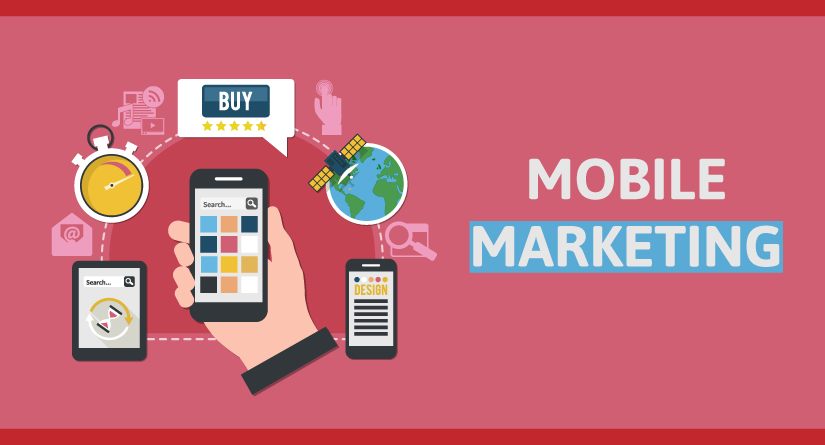
Text messaging (SMS) became widely available in the late 1990s, marking the beginning of the mobile marketing era. The techniques and sophistication of mobile marketing advanced along with mobile technology. The advent of smartphones transformed the industry and gave marketers powerful tools to develop campaigns that are both interactive and compelling. Thanks to the development of cutting-edge mobile technologies and the widespread availability of mobile internet access, mobile marketing is now a crucial component of an all-encompassing digital marketing strategy.
Different Mobile Marketing Types
Promotion of SMS and MMS
- SMS Marketing: Direct delivery of promotional messages to a user’s mobile device is known as Short Message Service (SMS) marketing. These messages, which are normally restricted to 160 characters, are used to convey alerts, reminders, and time-sensitive offers. With its high open and response rates, SMS marketing is a useful tool for quick and direct communication.
- MMS Marketing: By adding multimedia components like photos, videos, and audio, Multimedia Messaging Service (MMS) marketing goes beyond text messaging. Richer content can be conveyed through MMS messages, making them more engaging and improving the user experience overall.
Video marketing
Unfortunately, this is where video marketing efforts go off the rails. So much focus goes into preparing a good video that industrial marketers don’t consider what to do with it once it’s made. With that in mind, it’s important to have a plan for hosting, publishing, and promoting your videos.
Where To Host Your Videos
Let’s start here. In order to publish and promote your video, you first need to make it publicly available. There are several popular hosting sites, including:
- YouTube: YouTube is by far the largest and most popular video hosting platform on the planet. YouTube is very simple and straightforward to use. Given its popularity, it works exceedingly well across different devices and at different bandwidths, so your videos will never suffer. Plus, because it is part of the Google networks, it provides some added search engine optimization benefits. However, customization is limited, and you have very little control of what happens after your video is complete.
- Wistia: Wistia is a popular tool for marketing professionals, as it allows greater control over how and where your video is played. It’s great for embedding on your website, and the platform offers robust analytics, including video heat maps and lead generation tools. On the downside, however, some of the better features of Wistia will cost you about $100 a month.
- Vimeo: Originally launched as a competitor to YouTube, Vimeo has evolved to become the video platform for creative professionals. The aesthetics of Vimeo’s player is impressive and user friendly, and the community is very active and helpful. However, Vimeo users expect a lot of polish and production value, and that isn’t always ideal for industrial companies.
Optimize Your Video Thumbnail
No matter which platform you choose, you want to pay careful attention to the thumbnail image of your video.
The video thumbnail is easily the most important factor to drive a visitor to play or not play a video. One of the greatest driving forces of using video marketing is to prove to your viewers that you’re more than just a corporate logo and add a human element.
Something to remember when choosing an image for a thumbnail is that people relate to other people. We recommend making the thumbnail to your video a smiling human making direct eye-contact with viewers to increase the number of plays your video will receive.
Where To Publish Your Videos
You want to publish your videos in as many places as possible. Here are some ideas:
Create A Blog Post About It
Videos on blogs are proven to increase engagement and time on page. Use them to complement your written posts.
Be sure to post regularly. Search engines reward sites that post regular content, so publishing marketing videos on a regular basis will help you in your SEO efforts.
Post The Video On Social Media
You should use video on your social media channels as frequently as possible. Here are some reasons why:
- A Facebook video receives 135% more organic reach than a Facebook photo
- Videos are six times more likely to be retweeted than photos on Twitter
Incorporate Videos In Your Email Marketing
Adding video to your emails can boost engagement of that email significantly. According to Wistia, there was a 300% lift in click-through-rate CTR when using a video thumbnail over a plain image in an email.
Incorporating video into email marketing is not only easy, it can give you enhanced visibility into your marketing efforts and audiences. You can use videos to gather metrics, learn viewer behavior data, and translate that information into lead scoring and workflows. .
Promoting Your Videos
Buyers consume millions of hours of video every day. However, more and more companies are producing videos as well. That means you have some competition, and relying on organic views and engagement alone won’t always produce the best results.
Fortunately, a little bit of money can go a long way in ensuring your video reaches your intended audience. You can get started — and get results — with social media video ads and YouTube advertising for just a few dollars a day.
However, just like with any pay-per-click advertising, you want to follow established best practices in order to ensure you don’t blow your budget. This involves a lot of testing, specific targeting, and well-defined audiences.