For small businesses, getting noticed online can be challenging. Large companies often have bigger marketing budgets, but small businesses can still compete effectively by using the right Search Engine Optimization (SEO) strategy.
SEO helps a website become more visible on search engines when potential customers search for relevant products or services. A well-planned SEO strategy can increase organic traffic, generate leads, and help build long-term online visibility.
What Is SEO?
Search Engine Optimization is the process of improving a website so that search engines can better understand its content and users can easily find it.
SEO focuses on factors such as
1.Relevant keywords
2.Website content
3.Page titles and descriptions
4.Website speed
5.Mobile-friendliness
6.Internal linking
7.Backlinks
8.Local search visibility
Why Small Businesses Need SEO
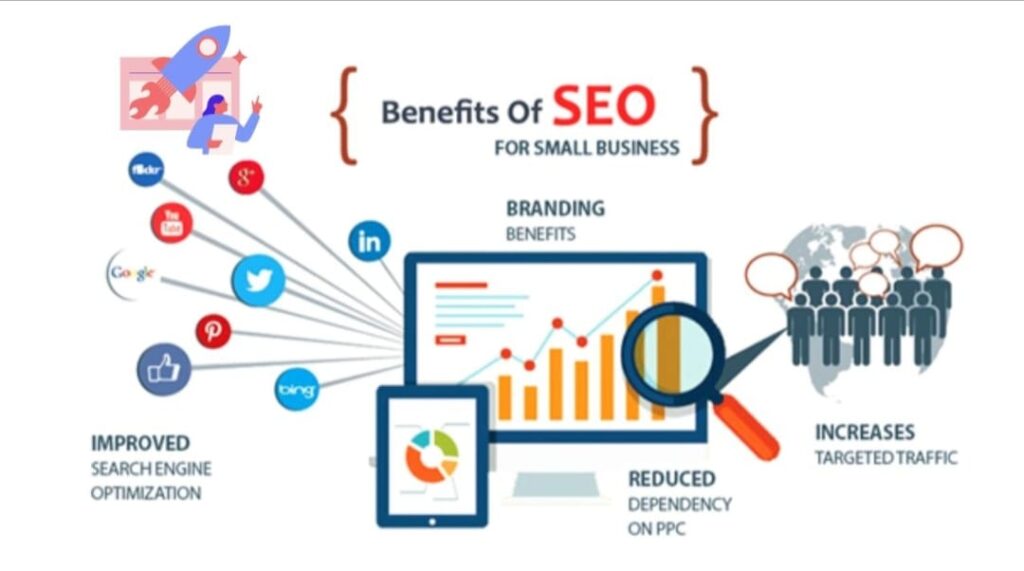
- Increase Organic Traffic
SEO can help your website appear in relevant search results and attract people who are actively looking for your products or services. - Build Online Credibility
Websites that consistently provide useful and relevant information can establish greater trust with potential customers. - Generate Quality Leads
SEO targets people who are already searching for specific products, services, or solutions. This can make organic search an important source of potential leads. - Improve Local Visibility
For businesses serving a particular city or area, Local SEO can help them become more visible to nearby customers. - Create Long-Term Growth
Unlike a campaign that stops when the advertising budget ends, SEO can continue generating organic visibility when the website is maintained and optimized properly.
Important SEO Strategies for Small Businesses
Keyword Research
Find keywords that your potential customers actually use when searching online. Focus on relevant terms that match your products or services.
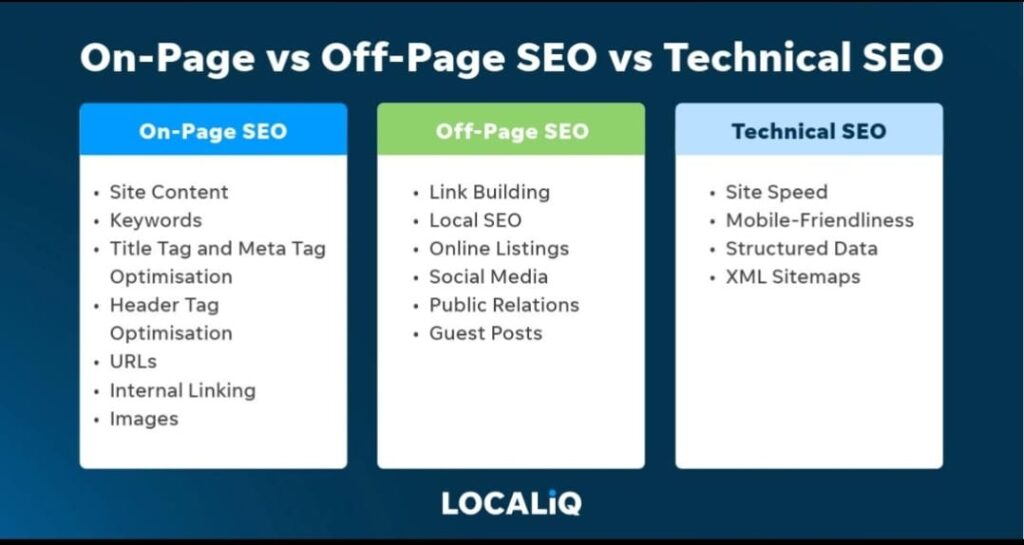
On-Page SEO
Optimize important elements of your website, including:
1.Page titles
2.Meta descriptions
3.Headings
4.URLs
5.Website content
6.mages and alt text
7.Internal links
Off-Page SEO
Off-page SEO focuses on activities outside your website that can support its authority and visibility. These may include quality backlinks, business listings, relevant directories, and digital PR.
Local SEO
If you operate locally, keep your business information accurate and consistent across important online platforms. Customer reviews and a well-maintained Google Business Profile can also support local visibility.
Technical SEO
A technically healthy website provides a better experience for both users and search engines. Pay attention to
1.Website loading speed
2.Mobile responsiveness
3.Secure HTTPS connection
4.Crawlability
5.Broken links
6.Proper site structure
7.Common SEO Mistakes to Avoid
Common SEO Mistake to Avoide
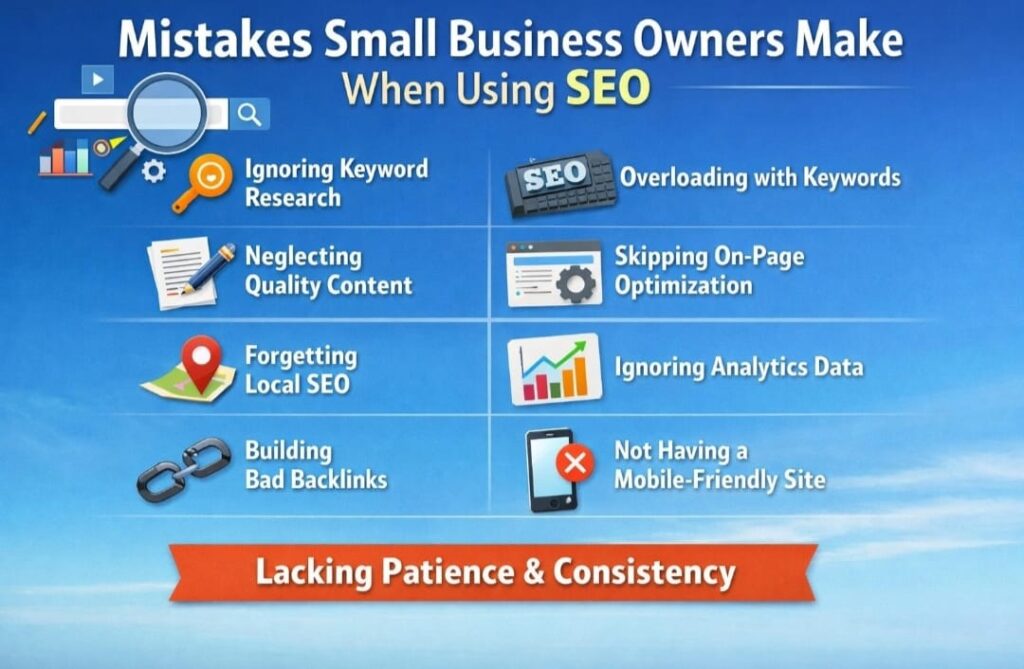
Small businesses should avoid practices such as
1.Keyword stuffing
2.Copying content from other websites
3.Buying low-quality backlinks
4.Ignoring mobile users
5.Publishing content without researching the audience
6.Using duplicate or thin content
7.Ignoring website performance
SEO should focus on helping users first, rather than trying to manipulate search engines.
How to Start SEO for Your Business
If you’re new to SEO, start with the basics
1: Understand your target audience.
2: Research relevant keywords.
3: Optimize your important website pages.
4: Publish useful, original content regularly.
5: Work on local SEO if you serve a specific location.
6: Build relevant and trustworthy backlinks.
7: Monitor your website performance and improve continuously.