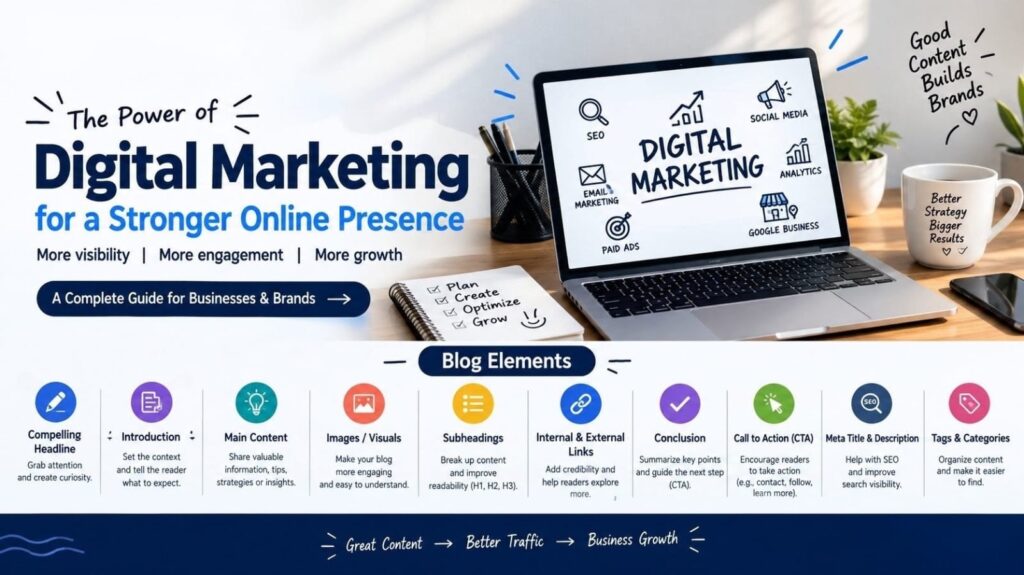
Digital Marketing Blogs: A Complete Guide to Learning and Growing Online
Digital marketing is constantly evolving. New platforms, technologies, search engine updates, advertising strategies, and customer behaviors are changing the way businesses connect with their audiences. For marketers, business owners, freelancers, and students, staying updated is no longer optional—it is an important part of succeeding online.
One of the easiest ways to keep learning is by regularly reading digital marketing blogs. High-quality blogs can provide practical knowledge, industry insights, marketing strategies, case studies, and updates that can help readers understand what is happening in the digital world.
What Are Digital Marketing Blogs?
Digital marketing blogs are online resources that publish information about different areas of digital marketing. These blogs may cover topics such as search engine optimization (SEO), social media marketing, content marketing, email marketing, paid advertising, analytics, branding, affiliate marketing, and conversion optimization.
Some blogs are written for beginners, while others focus on advanced strategies for experienced professionals. By choosing content that matches your skill level, you can gradually build your knowledge and improve your marketing abilities.
Why Should You Read Digital Marketing Blogs?
The digital marketing industry changes quickly. A strategy that worked effectively a few years ago may not produce the same results today. Reading reliable marketing blogs can help you stay informed and adapt your approach.
1.Stay Updated With Industry Trends
Digital marketing trends can change because of new technologies, customer preferences, search engine developments, and social media features. Regularly following industry blogs can help you understand these changes and identify areas where your marketing strategy may need improvement.
2.Improve Your SEO Knowledge
SEO is one of the most important areas of digital marketing. Digital marketing blogs often explain topics such as keyword research, on-page optimization, technical SEO, link building, local SEO, content optimization, and search engine updates.
For beginners, these articles can make complex SEO concepts easier to understand. For experienced marketers, they can provide new ideas and perspectives.
3. Learn From Practical Examples
Theory is useful, but practical examples can make marketing concepts much easier to understand. Many marketing blogs publish case studies, campaign breakdowns, experiments, and real-world examples.
These resources can show how different strategies are applied and what factors can influence their results.
4.Discover New Marketing Tools
Marketers use a wide range of tools for research, content creation, analytics, automation, advertising, SEO, and social media management.
Digital marketing blogs frequently review and explain these tools. This can help professionals understand what a tool does before deciding whether it fits their needs.
5.Develop Better Content Marketing Strategies
Content plays a central role in digital marketing. Blogs can help you learn how to create useful content, understand search intent, develop content strategies, write compelling headlines, and optimize articles for both readers and search engines.
Instead of focusing only on publishing frequently, modern content marketing should focus on providing genuine value to the target audience.
Important Topics Covered by Digital Marketing Blogs
A good digital marketing blog usually covers multiple areas of online marketing. Some of the most important topics include:
1.Search Engine Optimization
SEO helps websites improve their visibility in search engine results. Blog content may cover keyword research, technical SEO, content optimization, internal linking, backlinks, local search, and SEO analytics.
2.Social Media Marketing
Social media marketing involves using platforms such as Instagram, Facebook, LinkedIn, YouTube, and other networks to build awareness, engage audiences, and support business goals.
Marketing blogs can provide information about content planning, audience engagement, social media trends, advertising, and platform-specific strategies.
3.Content Marketing
Content marketing focuses on creating and distributing useful and relevant content for a specific audience. Articles, videos, guides, newsletters, infographics, podcasts, and other formats can all be part of a content strategy.
4.Email Marketing
Email marketing remains an important communication channel for many businesses. Digital marketing blogs often discuss email campaigns, newsletters, automation, segmentation, subject lines, and conversion strategies.
5.Paid Advertising
Paid advertising includes search ads, social media advertising, display advertising, video campaigns, and other forms of online promotion. Blogs can help marketers understand campaign planning, targeting, budgeting, ad creative, and performance measurement.
6.Analytics and Conversion Optimization
Collecting data is only useful when you know how to interpret it. Marketing blogs can explain website analytics, traffic sources, engagement metrics, conversion rates, customer journeys, and A/B testing.
How to Choose Reliable Digital Marketing Blogs
There are thousands of marketing websites available online, but not every article contains accurate or useful information. Consider the following factors when choosing which blogs to follow
Check the author’s expertise: Look for content written or reviewed by people with relevant industry experience.
Look for updated information: Digital marketing changes quickly, so older articles may contain outdated recommendations.
Focus on practical value: Choose blogs that explain concepts clearly and provide useful examples rather than simply repeating general information.
Compare different sources: Reading multiple reputable sources can give you a broader understanding of a topic.
Check the evidence: When an article makes a strong claim, look for supporting data, research, examples, or references.
How to Get the Most From Digital Marketing Blogs
Simply reading articles is not enough to build strong marketing skills. Try turning what you learn into action.
Start by selecting a specific topic you want to improve. Read several high-quality articles about it and take notes on the key concepts. Then apply one or two ideas to a real website, campaign, or personal project.
Track the results and compare them with your original performance. This process of learning, testing, measuring, and improving can make your knowledge much more practical.
It is also useful to maintain a list of trustworthy blogs and newsletters. Instead of trying to read everything published online, focus on resources that consistently provide relevant and useful information.
Digital Marketing Blogs for Beginners
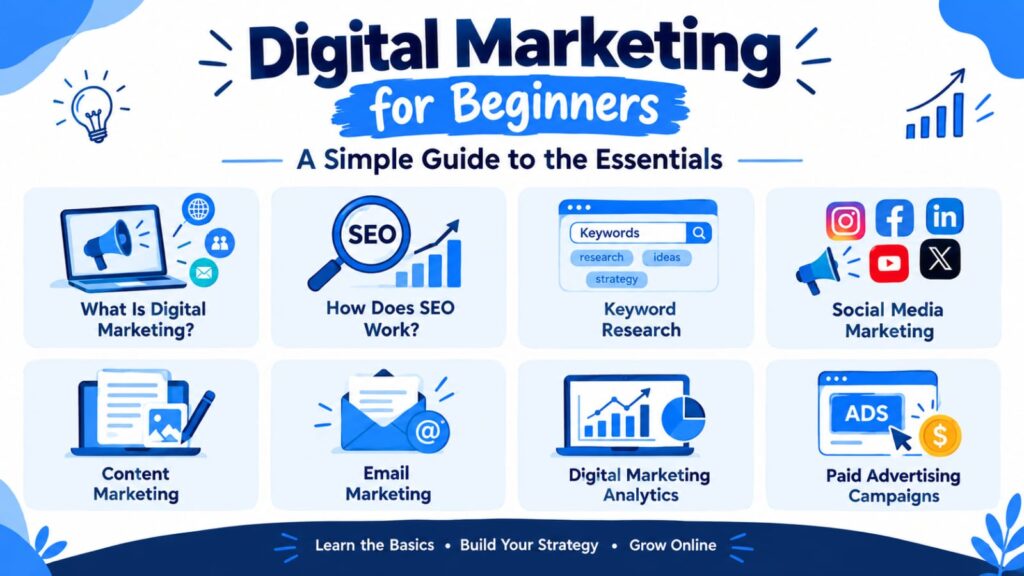
Beginners should look for blogs that explain fundamental concepts in simple language. Important starting topics include
What is digital marketing?
How does SEO work?
What is keyword research?
How does social media marketing work?
What is content marketing?
How does email marketing work?
What are digital marketing analytics?
How do paid advertising campaigns work?
Building a strong foundation before moving to advanced strategies can make learning much easier.
Digital Marketing Blogs for Professionals
Experienced marketers can use industry blogs to explore advanced subjects such as technical SEO, marketing automation, attribution, conversion rate optimization, artificial intelligence in marketing, customer segmentation, data analysis, and multi-channel campaign strategies.
Professionals can also benefit from case studies and industry research because these resources provide insights into how marketing strategies are being tested and implemented in different situations.
The Future of Digital Marketing
The digital marketing industry will continue to evolve as technology and consumer behavior change. Artificial intelligence, automation, data-driven personalization, video content, voice interfaces, and new digital platforms are likely to continue influencing how businesses communicate with customers.
This makes continuous learning increasingly important. Digital marketing blogs can serve as a convenient source of information for marketers who want to understand emerging developments and improve their skills.