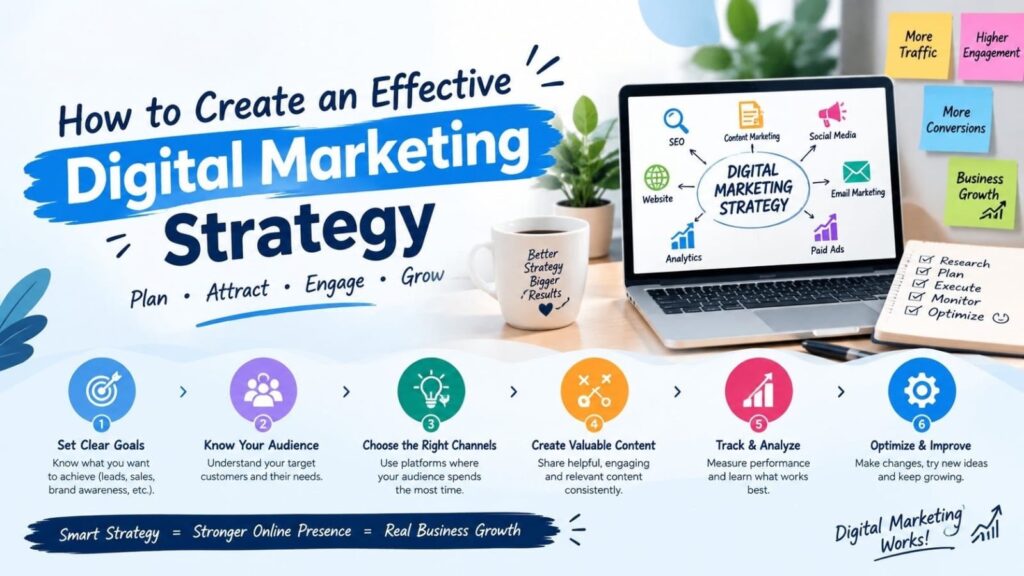
1. Define Your Business Goals
The first step is to clearly understand what you want to achieve through digital marketing.
Your goals could include
1.Increasing website traffic
2.Generating quality leads
3.Improving brand awareness
4.Increasing online sales
5.Growing social media engagement
6.Building a strong online presence
2.Understand Your Target Audience
Knowing your audience is one of the most important parts of digital marketing.
Understand who your potential customers are, what they need, what problems they face, and how they search for solutions online.
You can use this information to create content and campaigns that are more relevant to your audience.
3.Build A Strong Website
Your website is often the first place where potential customers learn more about your business.
Make sure your website is
1.Easy to navigate
2.Mobile-friendly
3.Fast-loading
4.Professionally designed
5.Informative
6.Easy to contact
A good website can help turn visitors into potential customers.
4.Focus On Search Engine Optimization
Search Engine Optimization (SEO) helps improve the visibility of your website in search engine results.
An effective SEO strategy can include
1.Keyword research
2.Creating useful content
3.On-page optimization
4.Technical SEO
5.Internal linking
6.Building quality backlinks
7.Improving website speed
Consistent SEO efforts can help your website attract relevant organic traffic over time.
5.Create Valuable Content
Content marketing is an important part of digital marketing. Instead of only promoting your products or services, create content that answers your audience’s questions and solves their problems.
You can create
1.Blog posts
2.Social media posts
3.Infographics
4.Videos
5.Guides
6.Case studies
7.Website articles
Useful content can help establish your business as a reliable source of information.
6.Use Social Media Effectively
Social media platforms provide businesses with an opportunity to communicate directly with their audience.
Choose platforms based on where your target customers are most active. Maintain a consistent posting schedule and share a combination of educational, informative, engaging, and promotional content.
Social media can also help businesses increase brand visibility and build relationships with customers.
7.Consider Email Marketing
Email marketing can help businesses stay connected with existing and potential customers.
Businesses can use emails to share
1.New products or services
2.Offers and promotions
3.Company updates
4.Helpful information
5.Blog content
6.Newsletters
Personalized and useful emails can help maintain customer engagement.
8.Track Your Marketing Performance
Digital marketing should always be measured. Tracking your performance helps you understand which activities are generating results and where improvements are needed.
Important metrics can include
1.Website traffic
2.Leads
3.Conversion rate
4.Engagement
5.Click-through rate
6.Search rankings
7.Return on advertising spend
Regularly reviewing these metrics allows businesses to make better marketing decisions.
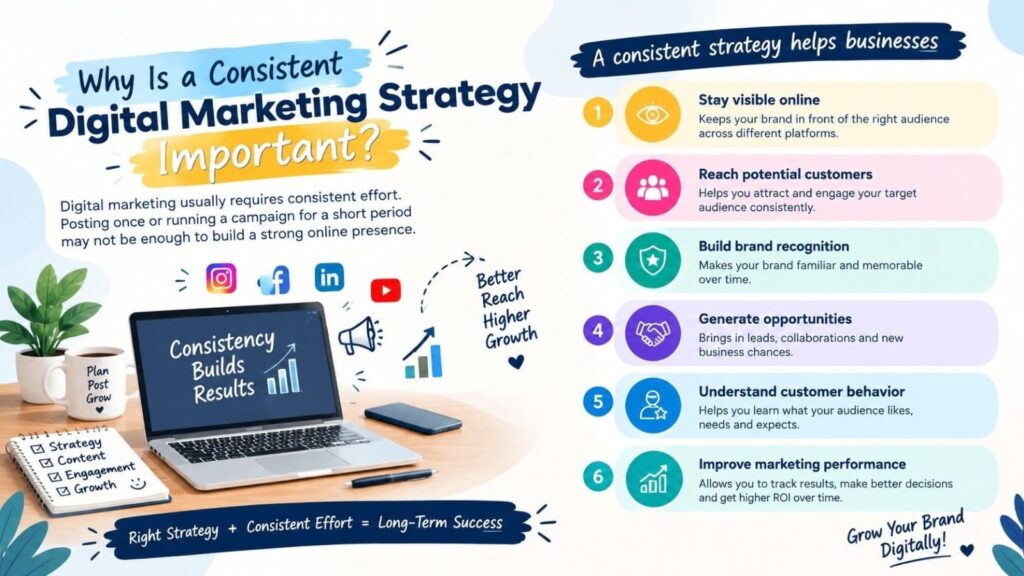
Why Is a Consistent Digital Marketing Strategy Important?
Digital marketing usually requires consistent effort. Posting once or running a campaign for a short period may not be enough to build a strong online presence.
A consistent strategy helps businesses
1.Stay visible online
2.Reach potential customers
3Build brand recognition
4.Generate opportunities
5.Understand customer behavior
6.Improve marketing performance
The right strategy may vary from one business to another, so businesses should focus on channels and activities that match their goals and audience.